SPF Scout · Blog
What the 6.0% beside Octinoxate on a CVS label means
On one CVS Health moisturizer, the Active ingredients block prints Octinoxate 6.0%. That number is a concentration the maker declares, not a measure of how much sun protection the bottle gives.
Published 20 November 2026
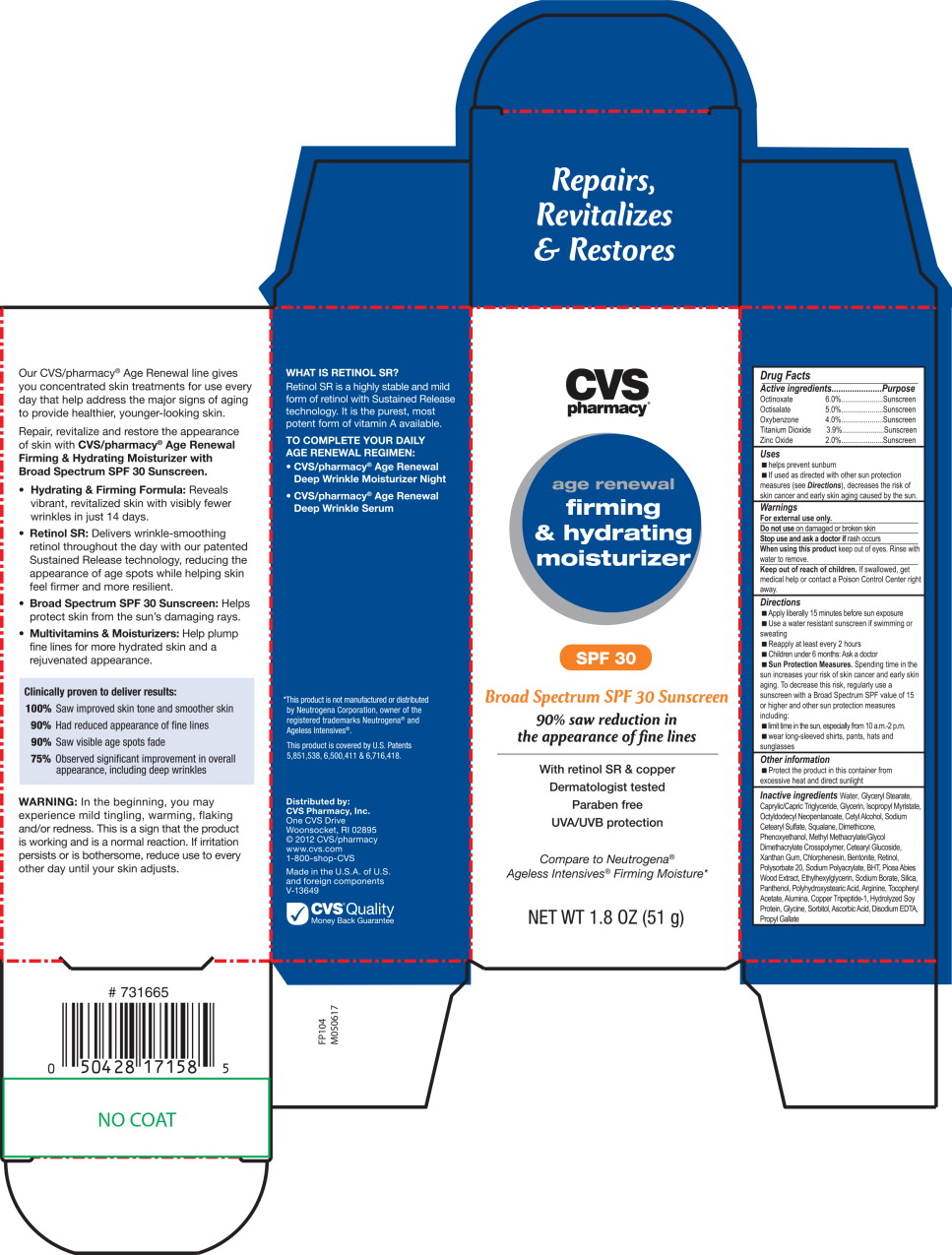
Label image from the manufacturer's FDA filing on DailyMed, retrieved 9 November 2026. The filing on DailyMed
On the back of the CVS Health Age Renewal Firming and Hydrating Moisturizer SPF 30, the Active ingredients block reads: Octinoxate 6.0% Octisalate 5.0% Oxybenzone 4.0% Titanium Dioxide 3.9% Zinc Oxide 2.0%. The front of the same package says SPF 30. Those are two different kinds of number, and the difference is the whole point of this post.
What the 6.0% is
The 6.0% beside Octinoxate is a declared concentration. It is the share of the formula that the manufacturer states is Octinoxate, written into the Drug Facts panel the way U.S. sunscreen labels print each active and its strength. Here is the Active ingredients text as it appears:
Octinoxate 6.0% Octisalate 5.0% Oxybenzone 4.0% Titanium Dioxide 3.9% Zinc Oxide 2.0%
Each percentage sits next to one active and describes only that active. The 6.0% tells you how much Octinoxate is in the mix. It does not, on its own, tell you how well the finished product performs in the sun.
What Octinoxate is
Octinoxate is an organic UV filter that absorbs ultraviolet light. Organic here means carbon-based chemistry, not a growing method. It also works as a light stabilizer, helping a formula hold up when it is exposed to sunlight. On an ingredient list it often appears under the name Ethylhexyl Methoxycinnamate, which is another printed name for the same filter.
The other four actives on this panel are UV filters too. Octisalate, Oxybenzone, Titanium Dioxide and Zinc Oxide each carry their own printed percentage, and each absorbs or blocks ultraviolet light.
Why the percentage is not the protection number
SPF 30 is the protection rating. It is measured on the finished product as a whole, after all five filters, the solvents, the thickeners and everything else are combined. It reflects how the entire formula behaves under a standardized test, not the amount of any single active.
So the two numbers answer two different questions:
- The
6.0%answers how much Octinoxate is in the bottle. - The
SPF 30answers how the whole formula tested against UV.
You cannot read one off the other. A higher filter percentage does not automatically mean a higher SPF, because SPF depends on the full blend and how it spreads and holds. And you cannot work backward from SPF 30 to guess any single active's percentage. The panel prints both because they come from different measurements.
This is also why the percentage is useful on its own terms. If you want to know exactly how much of a given filter a formula declares, the Active ingredients block is the one place that states it. The ingredient list recorded for this product names the same five filters among its entries, but it does not repeat the percentages. Only the Active ingredients block carries those.
Reading it on the shelf
When you look at a Drug Facts panel, the number clipped to each active is that active's declared concentration. The SPF on the front is the tested protection of the product. Octinoxate at 6.0% and the SPF 30 claim are both facts the maker prints, and they stay separate facts.
You can see the panel and the full ingredient list on the manufacturer's FDA filing on DailyMed: DailyMed record.
Educational information, not medical advice.
Where this comes from
Every fact in this post is read from a record stored in the SPF Scout catalog. These are the records it was written from, so you can check it against them.
- Octinoxate
- The filing on DailyMed
- Ingredient names, CAS numbers and recorded functions come from SPF Scout’s curated ingredient dictionary, grounded in CosIng, the European Commission’s Cosmetic Ingredient Database. Content © European Union, reused with acknowledgement.