SPF Scout · Blog
Methylcellulose: a thickener and stabilizer on the label
Methylcellulose adjusts thickness and keeps a formula from separating. Here is the function on record, the reviewed note, and one printed ingredient list.
Published 10 November 2026
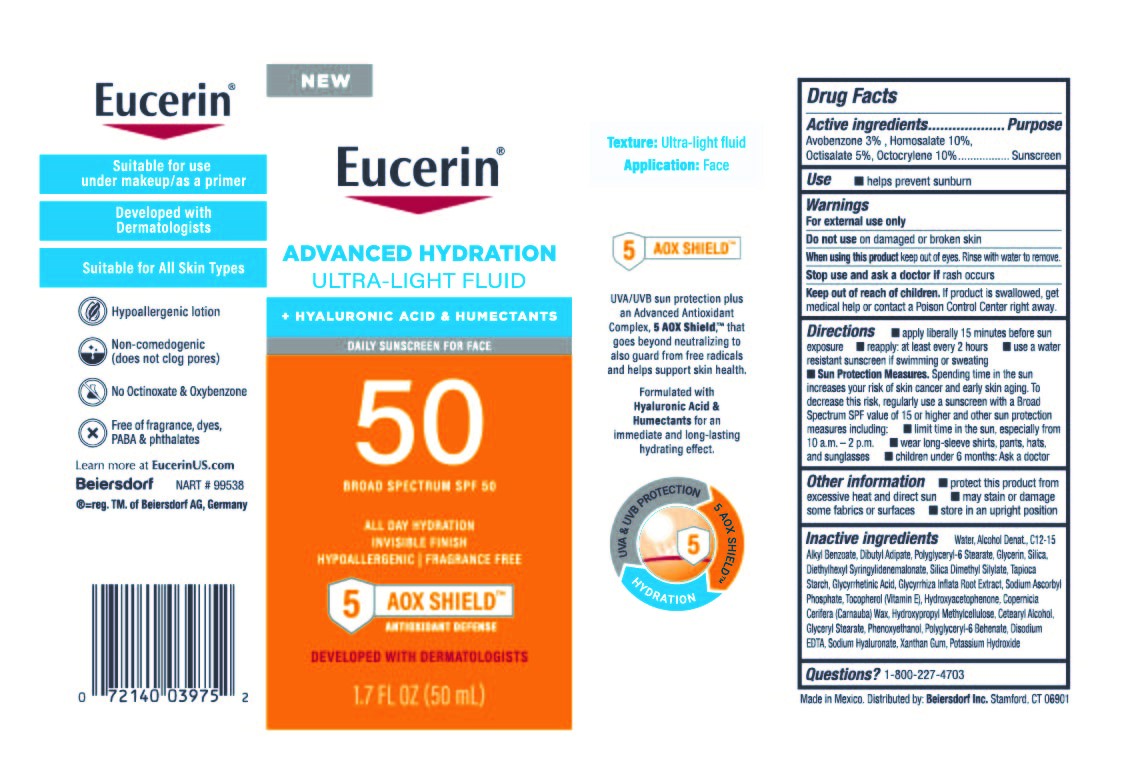
Label image from the manufacturer's FDA filing on DailyMed, retrieved 26 October 2026. The filing on DailyMed
The Eucerin Advanced Hydration Ultra-Light Face Sunscreen SPF 50 prints its active filters as Avobenzone 3%, Homosalate 10%, Octisalate 5%, and Octocrylene 10%, and its recorded ingredient list includes Hydroxypropyl Methylcellulose, a name that shares the word methylcellulose. Methylcellulose itself is a formulation helper: it changes how thick a product is and holds the mix together.
What methylcellulose is for
The functions on record for methylcellulose are binding, emulsion stabilizing, light stabilizer, and viscosity controlling. In plain terms:
- Viscosity controlling means it sets how thick or thin the product is.
- Emulsion stabilizing means it helps keep the water parts and the oil parts of a blend from separating.
- Binding means it helps hold the other ingredients together.
- Light stabilizer means it helps steady the formula against light.
The reviewed note for this ingredient reads:
Methylcellulose adjusts the thickness of the product and keeps the mix from separating. It also binds ingredients together and helps stabilize the formula against light.
None of these are sun-protection jobs. The work of filtering ultraviolet light belongs to the active ingredients printed in the Drug Facts panel. Methylcellulose sits among the inactive ingredients, where the texture and stability helpers live.
Where it shows up on a real label
The Drug Facts panel on the Eucerin Advanced Hydration Ultra-Light Face Sunscreen SPF 50 lists its actives as:
Avobenzone 3%, Homosalate 10%, Octisalate 5%, Octocrylene 10%
The full ingredient list recorded for the product is:
Octocrylene, Homosalate, Avobenzone, Octisalate, Water, Alcohol Denat, C12-15 Alkyl Benzoate, Dibutyl Adipate, Polyglyceryl-6 Stearate, Glycerin, Silica, Diethylhexyl Syringylidenemalonate, Silica Dimethyl Silylate, Tapioca Starch, Glycyrrhetinic Acid, Glycyrrhiza Inflata Root Extract, Sodium Ascorbyl Phosphate, Tocopherol (Vitamin E), Hydroxyacetophenone, Copernicia Cerifera (Carnauba) Wax, Hydroxypropyl Methylcellulose, Cetearyl Alcohol, Glyceryl Stearate, Phenoxyethanol, Polyglyceryl-6 Behenate, Disodium EDTA, Sodium Hyaluronate, Xanthan Gum, Potassium Hydroxide
The name that appears here is Hydroxypropyl Methylcellulose. It is a modified form that carries the methylcellulose name and does similar texture work in a blend. Alongside it this list carries other texture and thickness helpers, such as Xanthan Gum and Cetearyl Alcohol, so a reader can see that a single formula usually leans on several of these at once rather than one.
Why a sunscreen needs a thickener at all
A sunscreen has to spread as an even film and stay put long enough to do its job. A thickener gives the liquid enough body to go on without running, and a stabilizer keeps the oil and water parts from splitting while the bottle sits on a shelf. Methylcellulose is one of the ingredients that can do that quiet background work, which is why it is grouped with the inactive ingredients rather than the actives.
You can read the full label for this product on the manufacturer's FDA filing on DailyMed.
Educational information, not medical advice.
Where this comes from
Every fact in this post is read from a record stored in the SPF Scout catalog. These are the records it was written from, so you can check it against them.
- Methylcellulose
- The filing on DailyMed
- Ingredient names, CAS numbers and recorded functions come from SPF Scout’s curated ingredient dictionary, grounded in CosIng, the European Commission’s Cosmetic Ingredient Database. Content © European Union, reused with acknowledgement.